• Concerts
  • Music
  • Mission
  • Blog
  • Contact
  • Hungarian

conductor

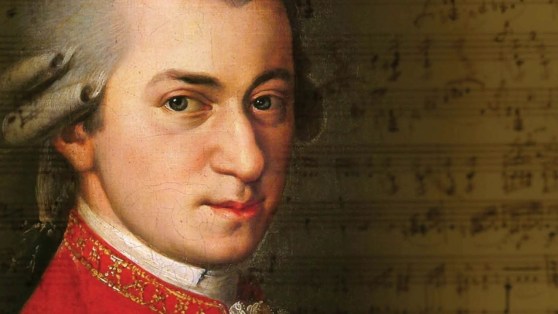
Mozart and time management

2023.08.01.
conductor, Mozart, time management

As if there is no tomorrow / as if there is always a tomorrow. Which one is how you live? The thinking of our ancestors was obviously determined by the practically constant compulsion to make the above paradigm choice, and this is the basis of the dynamic tension of mundane / otherworldly life, which is the main foundation of Christian culture. If you live like that today, there will be an eternal tomorrow, but if you live like that, don’t even consider buying preserved milk, , you won’t survive to consume it.

Christianity by the left (or rather by the right), so we are left with paradigm number two. We are comfortably surviving the day, waiting for something to happen, everything is pleasant, our only fear is that the comfort of our survival mode may be even slightly ruined by some unexpected unpleasant event (illness, war, the neighbor drilling the wall on the weekend).

We work (?) a lot (?), but we also live well (?), we don’t need anything else, though more money would be nice. And that’s it. The old-fashioned question of what the hell it’s all for is only asked by adolescents or frivolous, naive dreamers, but it is not at all the subject of so-called social debate or common thinking (because what is the subject?, let’s interpose that at once). I don’t think that in earlier, more beautiful times peasants were leaning on their hoes, stopping every now and then in small groups, scratching their heads over the possible meaning of life, but the fact is that the vast majority of resources invested in common (material) efforts – in church, art, even political thought and action (war) – were somehow related to the above question, unlike in our own bright age, when even the semblance of such a connection shall be avoided. In Michelangelo’s time, the oligarchs were no meeker, nor the money-changers any more groovy, but the common manifestations of society – and here I include Michelangelo, who was obviously not a personal product of Julius II, but a product of the social expectations of his time – did produce Sistine Chapels, Mona Lisas and Gesualdo motets, moreover, in large numbers. The hundred years starting from the end of the 18th century, the century of Mozart, Goethe, Petőfi and Turner, could have been such an era. I read Mozart’s letters from his last months, and I am gripped by a terrible, overwhelming shame, and I am reminded of another of my shameful relatives: “what were you seeking on this earth…” (Kosztolányi)

We cannot imagine, comprehend, understand the frequency with which a Mozart (or a Liszt, or a Petőfi, or even a Salieri) lived in that age of perpetual death (only two of Mozart’s six children reached adulthood), nor do we mean by the word “live” what they might have meant. The hero of our title woke up at 5am at the latest, visited his friends by turns, wrote the first letters of the day (followed perhaps by more in the afternoon), listened to freemasonic lectures and attended meetings, arranged a school for his son, went to the opera every night, drafting applications for a job, copying speeches, having coffee with Schikaneder, while playing billiards, dealing with financial affairs, surviving constant illness and physical sickness, inadequate heating, poor quality drinking-water, terrible and dangerous medicines. And he composed more than six hundred works, perfect ones almost without exception. All this in thirty-five years (sorry, only thirty, he couldn’t manage to do it in his first five.) With a Salieri, the difference will only appear in the quality of the works the rest is about the same.

It’s not just about diligence, it’s about the cause of diligence. The dilemma can be posed as Attila József put it: Why should I be honest? I’ll be laid out, anyhow! Why should I not be honest! I’ll be laid out, anyhow!

But this is our age already: here, being laid out won’t be followed by anything, the dilemma goes on till the heart sound stops. And perhaps this is the key point: Mozart was not a cynical, flamboyant genius of his time, who solved the tasks before him with the superficial religiosity of the conventions of his time, whose horizons would have been filled exclusively with eating-drinking-fucking-laughing.

That way this wouldn’t have been possible. The Magic Flute is not a silly fairy tale with freemasonic babbling and mystical blah-blah-blah, which today serious people (i.e. the miserable protozoan of an unenchanted world) cannot interpret without chuckling (Mozart was insulted to death by a contemporary audience member of his opera who rewarded his masterpiece with continuous, incomprehensible giggling). The Magic Flute is about life, about the flow of tribulations, the vale of tears, the hellish ordeal, the physical and spiritual suffering that leads to tomorrow, to salvation if you like. He does this with the love that is so essential to Mozart’s music, and with the understanding, the loving embrace of all humanity, a gesture we will hear again – much more desperately – in Beethoven’s Ode to Joy.

He is not an infantile, hedonistic, unconscious angel, who has been penned works of heights beyond his reach – as the unfortunate twentieth century has tried to explain it. Not Papageno, but a thirty-five-year-old Sarastro, with mature wisdom, acquired and suffered knowledge and wisdom (!), a real self-made man at an exceptionally high stage of personal development – that was Mozart, the way he seems to me. Figaro and the Jupiter Symphony were not dropped here by chance, but by a man like us, “close to our hearts”. Someone who knew what was in store for him, loved his partner with a true, deep love, did what he had to do as seriously as possible so there will be a tomorrow. This is also the “secret” of the Magic Flute: there is no instant tomorrow, life is a momentary transition, we are given only moments between waking up and finally passing out, and in those moments we must starve, listen, and pass through fire and water. Our footsteps can thus be guided by nothing other than a full and mature faith that leads us to the eternal tomorrow that will be born after the death of the calendar tomorrow, to union, to love, to the unknown realm beyond the world of night and day. That’s where Mozart was headed up to, and that’s how he became, that’s how he could only become Mozart and also a truly happy man.

Where are we headed up to? Lake Balaton? Wellness? Retirement? Will it be easier all at once? “This road leads toward the target” – but you will have to choose your target. And wisely.

______________

Author: Máté Hámori
Photo: Wikipedia

Chekhov, rifle, muses

2023.07.02.
Anton Pavlovich Chekhov, chekhov, conductor

“Inter arma silent Musae”, says the wisdom, which is neither old (a presumably modern paraphrase of a quote from Cicero) nor true, as countless examples prove. When arms speak, muses are silent – but no, neither the muses, nor Eros, nor Apollo, nor Pallas Athena, nor the other deities have withdrawn, in fact they are having a great time amidst the clash of arms, see Iliad.

When I was a child, one of the main world-political phrases was “demilitarization”. In principle, the Cold War had just ended, everyone breathed a sigh of relief that the evil had fallen, good had won, Armageddon had been averted, and it was time to disarm. And now, still in the final hours of my youth, I see that the prefix “de-” has slowly worn off, and everyone is equipping, buying and supplying weapons, developing armies, recruiting soldiers, etc. etc. etc. . Of course I understand, the other started it, this is only to preserve peace, and it’s a necessity and let’s face it, but, really, let’s finally read history. You don’t even need to go back to Cicero, just flip open a history book at any point and you will see how all “well-intentioned” armaments did a crescendo into ever bigger and bloodier wars. The real rifle is only Chekhov’s rifle: if it appears in a play, sooner or later it will be fired, so despite all the childhood hopes, I (and my children) will probably live in times of war. There it is, let’s get over it.

The point is not that, anyways, but what deities are playing with while people are killing each other? The Iliad, when reading it and letting the dust kicked up by Achilles’ and Hector’s horses settle, we will see no heaps of bones or a pool of blood above the ruins of the fallen bastions of Ilion or the ruins affording a lamentable spectacle after the blaze, but two beautiful love stories, set within the most human and ancient scenery by the great director, and that scenery is the war.

But what remains is pure art, the muses rejoice and weep, their weeping merges with the lament of Achilles, who is hunched over the body of Patroclus, heedless of war, history, heroic death, just weeping, and from his weeping Western art is born. And of course, the other brilliant doorstop, War and Peace is not about war and peace, not in the least. It’s about Prince Andrei looking at the sky, Natasha and the many faces of happiness and unhappiness, Pierre’s pathfinding, the many questions before end comes. And this is what makes it beautiful, that the answers are nowhere to be found, and the questions can be asked in the noise of gunfire, and perhaps they echo longer than in times of peace.

Art is not dead, it’s regaining strength. Just listen.

______________

Author: Máté Hámori

What is a rehearsal?

2023.05.26.
concert, conductor, orchestra rehersal

For those who find what happens in a symphony orchestra a mystery, including the conductor’s completely obscure and visual incantation-like activity, the institution of a rehearsal may raise a double question mark. And yet musicians – except perhaps opera singers – spend the vast majority of their time sitting in endless rehearsals, and the sense of it all is often, let’s be honest, not clear even to them.

The basic expectation (which of course is rarely fully met) is that everyone arrives fully prepared for the first orchestral rehearsal so, in theory, the 3-hour orchestra rehearsal is not the place for individual practice (depending on the size and quality of the orchestra, such an occasion costs the orchestra’s owner around 500,000-1,500,000 HUF). What is it good for then? Well, ideally, if everyone knows everything, it’s “just” a matter of setting the proportions, climaxes, tempos, characters, pitches, timbres in a uniform manner, and that’s all the conductor’s responsibility. It’s not his job, because the baton would not make a sound even for God’s sake, but he has to settle these “matters” reassuringly before the orchestra can perform in front of an audience. The full realization of such a thing differs from person to person, some need one, some would need thirty to achieve satisfaction, but this is only one of the building stones of success.

It is also a matter of the rehearsals in what state of mind the musicians will go into battle, how much confidence they will have in the conductor,whether they dare to trust him in an otherwise stressful concert situation, and whether the conductor – like a good military leader – can pull some unexpected stunt in front of the audience, which will turn his orchestra wild, close to a catharsis. Will those 50-80-100 people who are all masters of their craft (in their own opinion, usually the greatest masters) and who often know more about the details of the performance than the maestro himself, become his instrument? Well, you can guess this already during the rehearsal process, and although many times a concert by a good rehearsing conductor turns into a boredom and vice versa, rehearsal is an act of establishing (mutual) trust.

Like the date before the act of love, you need it if you want a lasting experience later. But trust goes both ways, so one of the biggest “wow” experiences for young conductors is when they first start to trust the orchestra (own experience). This is when miracles happen, however without this confidence, the most serious rehearsal process and the most prepared baton virtuoso can only expect a mediocre, slightly uninspired and certainly forgettable performance on stage. Nevertheless, all those people bought their tickets not for fake sighs…

So, let’s trust the orchestra and miracles will happen!

______________

Author: Máté Hámori

Me-Mo-Ry! – Preparing: The conductor! 3. part

2022.12.02.
classical music, conductor, Máté Hámori, memory

Preparing: the conductor! (Part 2)

2022.11.09.
classical music, conductor, Máté Hámori, Mozart

We took our next fresh, crisp score at the end of the previous part and played it through on the piano thoroughly, just to get to know it. The instrument is important to me for two reasons: firstly, it helps to clarify passages difficult to hear at first reading, and secondly, the medium of music is physical vibration after all – and often what is not immediately “visible” on paper gets immediately brought out by the sound, for example the character of a theme or the significance of a counter-melody. It’s the same with poetry: sometimes you have to recite a line loud to understand, or rather perceive, what it’s about.

F.A.Q.

When closing down the piano, we reach a stage of preparation that for many (well, most of the) people is a mystical experience hard to perceive. This is the part when the conductor glares at the score blankly for hours. The most common question in this regard: “do you actually hear what’s written there?!”

Well, for most musicians, the principal weapon is inner hearing. Not much technical literature have I found, although I sought. . In Hungarian, Iván Vitányi’s The Psychology of Music is the most detailed work on the subject, but it does not fully articulate what this actually is. Based on my own experience, I would compare it to a simulator that mixes millions of sound samples stored in the brain to produce a sonic image that changes with each re-reading, initially being sketchy, then becoming more and more detailed, which the musician then tries to reproduce on his instrument or on the orchestra.

For the conductor, the process of learning consists in the grooving and polishing of this inner sonic stream, and precisely because of the way this simulator works, it never ends. I would venture to say that there is no point in time at which you have learnt the piece and you are done. We always arrive at a certain subtlety in this inner sonic image, which can always be further refined – of course, within the limits of the individual’s abilities.

Let’s say, for example, that the young conductor opens the score of Mozart’s “Great” Symphony in G minor for the first time:

It usually starts by getting to know the melody and hearing it from the inside – firstly at a tentative tempo, without dynamics or timbre.

Then he also discovers the basses he will mentally match to the melody.

Then, struck by lightning, he discovers the “diabolical” difficulty of the melodies the viola received already in the first bars.

He puts all this knowledge together and now hears a three-layered fabric – without tempo, color, dynamics or proportions.

Forgetting the good old music school mantras, it is usually only then that the eager youngster realizes that the piece has a tempo signature and dynamics.

He then begins to search for the right tempo, in which the movement of the first violin melody, the playability of the viola parts and Mozart’s tempo marking are all important factors. What the novice conductor does not know here is that they can only find a real, workable tempo if they have embraced the whole movement as described above and has taken into account the “tempo needs” of the different themes.

Now the real refinement starts: the brain slowly begins to blend the melody and the accompaniment with their respective violin and viola timbres, to establish the proportion of the accompaniment (30% bass, 45% violin, 25% viola), and to ponder the phrasing: does the musical phrase begin in the 3rd or 1st bar? (This is often the most difficult thing to mull over: in this particular case, for example, I don’t think there is a clear answer.)

This phase actually lasts the longest, and the more splendid the (master)piece is – the longer it can last. That is why it is possible to conduct the above symphony five hundred times, because the shaping of the piece never ends. Often, a different tempo seems more interesting, a counter-melody becomes more significant, a character changes: the pieces living inside evolve with us. That’s why you can happily pursue this vocation until you pass away, you can never get bored.

(to be continued …)

______________

Author: Máté Hámori

Preparing: the conductor! (Part 1)

2022.10.05.
Artúr Nikisch, classical music, conductor, Máté Hámori

I often – many times – get the question (of course following the most popular of the questions, which is this: actually, what is a conductor needed for at all? – but more on that later) how does a conductor prepare for a concert? So I tried to summon how this goes – in general.


A conductor on the Lenin path.

The only “wisdom” I can quote from the red-handed Vladimir Ilyich Lenin (only my first-grade certificate had a coat of arms with stalks, thank God) is also a conductor’s most important travel pack for a life: Learn, learn, learn.


Nikisch – the ancestor of the infallible tyrants

Of course I can’t write about how The Conductor learns, as this field includes countless cults too. I am not going to talk about the unrepentant geniuses who, thanks to their photographic memory or their infallible voice recorder brain, hardly ever learn. These included, for example, the legendary Arthur Nikisch, the great-grandfather of all modern ‘great conductors’, idol of the divine Furtwängler.

Nikisch is said to have had such a photographic memory that he often didn’t even open the score before rehearsal, and then played through the piece with the orchestra once, closed the score – and knew it. The whole piece by heart. Now, we can dismiss such people with a contemptuous wave of the hand, because they “don’t understand this anguish”, at least what the constant hunching over the score means. (It is of little consolation to modestly able geniuses that this Nikisch practice also has its downside. The story goes that Max Reger once teased the master, who was about to sight-read prima vista, that he wanted to hear the double fugue first from his new piece. He smiled for a few minutes at Nikisch’s frantic flipping back and forth, then resignedly noted that there was no double fugue at all in the piece.)

Beyond Nikisch and Kocsis, there lie thousands of conductors – including me – who learn either slowly or more quickly, doubtlessly in agony. As with so many things, everyone does it differently, so I’ll tell you how I get to know a piece.


With or without preview

When a new piece of music comes to the conductor’s attention, two cases are possible: either he already has aural experience of the piece, or he is about to conquer a completely virgin territory. . In a way, I prefer the latter, for I can’t rely on my past memories as a crutch, but the thrill of discovery is coupled with a completely fresh set of eyes and ears, which can be a very important aspect in the long run. As the first encounter is of utter importance. I am convinced that here, as in instrumental practice, a significant part of the learning/practicing process is nothing more than correcting mistakes / misreadings fixed during the first read-through / first playing. It is no coincidence that in a letter Mozart wrote that he considered a musician to be ready when he plays an unfamiliar piece of music put in front of him at first reading, in tempo, flawlessly and with a right taste (recently we would say LOL, or something rasher), because our brain is a formidable instrument: it records every detail perfectly in the deeper, not yet consciously recallable memory. Of course, I don’t know of any musician who could live up to Mozart’s expectations, so we mortals are left with hours and hours of study and practice. Bad luck.


Now there’s chemistry, now there isn’t.

For my part, I prefer to start getting to know a piece by playing it thgrough thoroughly on the piano. Of course, instead of Mozart’s manner of “in tempo, flawlessly and with a right taste”, I usually start the first round in a sloppy, repetitive, analytical way. And it is usually around the secondary theme that I find out whether the “chemistry” between the piece and me works or not, whether there is love at first hearing or whether we are in for a subtle, prolonged process of liking each other during the hours we spend together. When the torch of passion is lit, it means a great joy, because – as with real love – you can almost overlook the difficult, unwanted moments. Which is a bit different to works you “must love”.

One thing is for sure: one of a conductor’s main duties is to arrive at the first rehearsal with maximum preparedness, for on this rehearsal somewhere between 10:00 and 10:10 is where it turns out how the concert four days ahead will be. And there’s long and winding road to this preparedness…

(to be continued …)

______________

Author: Máté Hámori

Reverence, September

2022.09.11.
Academy of Music, Beethoven, Britten, classical music, conductor, Máté Hámori, Respighi

It all started on the corner of the streets Munkácsy Mihály and Szondi. Not before I stepped on the crosswalk, but by the time I crossed Szondi Street towards the corner of Epreskert, it was already there. The chocolate was already dripping, the pistachio was still holding, no one on the streets, the sun was blazing like a torch – as my distant relative Dide would have written. And then time stood still, and in my hand with the melting ice cream I found the perfect moment, the unspoken bliss of existence.

There are some things one does not out of necessity, but in obedience to some hidden, inner impulse. Sitting in an empty cinema alone, popping down for an ice cream, getting off one stop earlier and walking, smiling at the old lady on the subway. And such thing is listening to music. It makes no sense, it makes no profit, it does not “move the world forward”. But it can preserve that moment, the one that crawled alongside me in the crosswalk and led me by the arm for a few more minutes. It’s a miracle like the one Louis Daguerre saw after long minutes of anxious waiting, when the exact image of a busy Paris street was outlined on the glass – and stayed there forever. Poetry, music: timeless photographs of moments we wait for all our lives, often in vain.

The ice cream is gone, leaves will fall, days are getting shorter, streets will get crowded. Yet, that moment will stay with me. Thanks to you, Johannes! Thanks to you, Dide!

My September stop on the path of musical beauty and reverence:

21-09-2022: Respighi / Britten / Beethoven – Academy of Music >>>

______________

Author: Máté Hámori

Dream of the motherland

2022.08.14.
Béla Bartók, classical music, Concertó, conductor

The expression “most Hungarian” is a stupid one, but somehow this is what comes to mind when mentioning Bartók’s Concerto. Yet he wrote it 7000 km from Hungary, in his voluntary exile, and there is not a single folk song quotation in it, even though it is in English, which refers to a Western European baroque form, even though his music is completely universal and, if you like, international.

In spite of all that. It’s not homesickness or despair or pain that this music transmits to me. What the sounds outline is a picture of a perfect Hungary that never existed, but which Bartók nevertheless made an inner reality. Of his personal homeland.

The crickets and frogs in the Elegy (3rd Movement) may have been roosting at Saranac Lake in the US, where Bartók composed his piece, but the melody of that Szekler lament in the movement still unmistakably places this magical night on the other side of the ocean. In the 4th Movement, the quotation of “You are beautiful, you are wonderful, Hungary” is not, in my opinion, a protagonist, merely a scenery element, yet it adds a Carpathian Basin watermark to a movement that is bustling with world upheaval and cataclysm. Just as the accents of the second movement’s playful couplets unmistakably echo the weight formulae of Hungarian folk dance music – either way, this cosmopolitan symphony speaks Hungarian.

And it makes me smile just to know that this Hungarian language is understood all over the world. Ady, Attila József, Kosztolányi did not have the privilege of these two together: the beautiful Hungarian language and the world at large that understands it. Bartók did – but it’s his personal tragedy that only after his death. Today, however, the Concerto is undoubtedly the most performed and recorded Hungarian piece in the world, which speaks more eloquently than any far-fetched Hungarianism or “Hungaricum” about a great man and about us: our language, our homeland. Listen to it, withhold and learn. For there is something to learn and someone to learn it from.

______________

Author: Máté Hámori

Sound of the baton

2022.08.12.
classical music, conductor, Máté Hámori, Sound of the baton

A widespread, a sort of a “final argument” against conductors, rubbed preferentially to our faces by orchestral musicians half joking, half seriously: baton makes no sound.

The bon mot is true by not being true, being a blessing and a curse for a conductor. The only musician not making any sound (okay, many of them sniffle, gurgle or even sing quite intensively while conducting, but this is not necessarily a part of the artistic performance), still, he is the one who receives the most of the celebration (or derision) after a concert.

Why is that? What exactly does a conductor do onstage? And what does he do at the rehearsal? Why is he strolling along the street with a score in his hands? What happens if he flubs? What is the similarity between football and orchestral playing? Is a conductor really like a potato? How much does a tuba player practice? (Indeed, how much?) What should you do about contemporary music? Should opera houses be blown up or built up? Why is music the most perfect artistic form?

This blog is about these questions and more. This blog is about these questions and more. I’m not sure I can always give exact answers, but that’s not the purpose: I want our slightly enchanted world to be open to those who “just” sit down at a concert and want to have a good time, because at the end of the day it’s all (the concert hall, the orchestra, the instrument, practicing, the composer) for them, the audience. And we musicians, especially the conductor, are the eccentric kind, wanting to deliver as much as possible of the wonder that music brings to our lives.

Well, this is the reason why this blog has come to light.

Of course, one question remains: should a musician try to write at all? It’s a challenge that can go either way, nevertheless, uncertainty is soon dispelled by the teaching of an eternal optimist:

“No business without risk.”
(Fülig Jimmy)

______________

Author: Máté Hámori

Search

Recent Post

zibrica domb

Június 4. Alsócsitár

Nagyságát nem a tudása, nem az érdeklődése, és nem a ...
Szegő András újságíró emlékére

Egy nagy karmester emlékére

Nagyságát nem a tudása, nem az érdeklődése, és nem a ...
Komolyzene nincs, csak zene van

Komolyzene nincs, csak Zene van

Abban nincs semmi meglepő, hogy az a nép, aminek egyébké...
Mozart Varázsfuvola díszlet (1815)

Mozart és a time management

Ha így élsz ma, akkor lesz örök holnap, ha viszont úgy,...
2024 ® MATÉ HÁMORI
ALL RIGHTS RESERVED
We use cookies on our website in order to provide the most relevant site experience by remembering your preferences and visits. By clicking the "Accept All" button, you consent to the use of ALL cookies. However, you can visit the "Cookie Settings" menu item and give partial consent.
Cookie SettingsI accept all
Manage consent

Privacy Overview

This website uses cookies to improve your experience while you navigate through the website. Out of these, the cookies that are categorized as necessary are stored on your browser as they are essential for the working of basic functionalities of the website. We also use third-party cookies that help us analyze and understand how you use this website. These cookies will be stored in your browser only with your consent. You also have the option to opt-out of these cookies. But opting out of some of these cookies may affect your browsing experience.
SAVE & ACCEPT
  • Magyar (Hungarian)
  • English