• Concerts
  • Music
  • Mission
  • Blog
  • Contact
  • Hungarian

classical-music

Everyday miracle

2023.04.06.
classical music, composing music, Easter, Péter Zombola, Passion

I don’t know whether significant events exist. Perhaps I would say no, because everything that happens is just repetition, a predictable and calculable everyday event from birth to death. But for me, the moments when a new work of art is born always stand out in the everyday events, and by that I mean what the word really means: real art.

Passion composed by Péter is real. And music, in a sense for what I want to be involved in music for the rest of my life, and at this point, unfortunately, words fail me, I can’t put this particular “in a sense” in words, perhaps it can’t even be put.

The good thing about this piece is that the composer is concerned with nothing but pure music, and he is able to dissolve his own inner world into music with apparent ease. And how good it is to find out that there are still people who have this level of inner life that can stretch and fire a seventy-minute piece.

Because the piece is about Péter Zombola, not about Jesus Christ, and this statement may not shock anyone who cares about art in 2015. That’s right, old stories only make sense when we ourselves become the protagonists. It is perhaps no coincidence that, for centuries, the Passion Play has seen different actors taking up the cross and carrying it to the village calvary each year, not to mention the more extreme examples of this identification, say in the Philippines.

And the words of the story appear like dead letters from a dusty bible ground between the teeth of the scientist who found the Book, running his finger over the lines – yes, that’s the text, that’s the story word for word, I remember that. But what’s actually happening, as in the works of the great predecessors, is not revealed by the story. What’s beautiful is that the music begins to speak where the words fall silenced: in the interludes interspersed between the choral movements and in the prelude and postlude music that frame the piece.

It is these movements that give the piece its vein, their tension that holds together this substantial construction, in which the biblical lines blabbered by the choir merely wander as commentaries under those vast domes. It is like Bluebeard’s castle: dark, full of pain and blood, yet not cold. This castle is heated by a profound love, and this love transforms even the otherwise ruthless and unbiased choir in the plea of the penultimate movement, even if the initially whispered request later grows into a howling demand: love in this piece has transformed the world, transformed humanity.

The neutral evenness of the universe, Kubrick’s monolith, is equally present in the post-love world, where the canon of recurring questions chanting “why?” is repeatedly filtered through the Babylonian noise of humanity. And the answer is an old church hymn I heard so often as a child from the old women’s choir, which accompanied the ever-false organ lagging beats behind: Sweet Jesus, for you I live, Sweet Jesus, for you I die…

It’s good to know that art is not over yet. There will be something to get up for tomorrow.

______________

Author: Máté Hámori

Kalos – Beauty in the world

2023.03.11.
beauty, classical music

According to the story, when a young inventor showed Leonardo the blueprints of his latest flying machine, the master took only one look and declared that the contraption would never fly. And how can you be so sure? – panted the scalded colleague. Because it’s not nice – was the answer.

The story, apart from being nice (!), carries a deeper meaning. A secret knowledge, if you like, that has been almost completely lost to our post-scientific age because of the misunderstanding of man living in the age of science. The beauty hidden in the snowflake, in birth, in memory, or in the ticking of the clock is not just a bushel on the hat of reality: it is the deepest and truest meaning of reality itself – at least for us.

For what is it that makes us different from our ancestors, what has evolution given us humans that makes us stand out from the animals? Perhaps empathy, wisdom, the ability to plan? Unfortunately, this is quickly disproved by a glance at the front page of any newspaper. . The gift that man first received in creation is the greatest discovery we have made in the last two million years is: beauty. This discovery opened the door to the other world, it spurred us on to explore the terrestrial world, it shaped our laws and the order of our states, it guarded our greatest enterprises from the pyramid of Cheops to the discovery of Antarctica, it taught us to respect and to desire, it made us human.

Beauty is the daemon that inspires the whole world in our eyes, that gives meaning to bean soup and late-night conversations, to science and the sadness of the aunt on the tram. Let’s cherish this treasure, because through it we have come to love ourselves and the whole universe. Don’t let love shrink in you! Don’t let beauty fade away! Keep the flame alive!

______________

Author: Máté Hámori

Ode

2023.02.13.
art, catharsis, classical music

Here I am sitting. It has happened to everyone, and will happen to everyone as long as there is a human being on Earth. More correctly, “man” will live on Earth as long as this happens to him. It happens to him, and he dies, because he has to die. This is how it is defined, with the French ‘petit mort’ only mentioned in parentheses.

My dear fellow human beings: I can wish you nothing better, nothing more, than to live this great and small death. No matter if it’s once or a hundred times, just let that light come on, just let that fearful fluttering in your stomach, just cry and laugh, be disappointed and perish in all love, believe that there can be “something” before the “nothing” consumes everything.

Art is a very simple thing, it starts and ends here: from the ‘petite mort’ to the ‘grande mort’. There it is in the sounds, in the dead black notes, the feeling that has torn a man apart, blown him to heaven and cast him into hell. The man is no longer alive: I say Mahler, I say Bartók, but these are just names, letters. Their little deaths have survived that final, that all-covering dies irae, dies illa. And now I, a late offspring, with the storm-torn, living hearts of great old lovers in my hands, I cry out to the darkness: Oh death, where is your sting?

______________

Author: Máté Hámori

Thanksgiving at the start of the year

2023.01.02.
2023, beginning of the year, classical music, start of the year, Thanksgiving

“Fine, Laus Deo!” At the end of many of Haydn’s scores you will often find this prayer – “end, glory to God!”. Of course, there may be a sigh of relief in this (see: “Mama, look, oh, this poem is also done!” J.A.), but there is something even more important. And that is – gratitude.

Revolutions and wars followed each other, human suffering often escalated to the point of the unbearable, and all the while Beethoven, Haydn, Bach and Bartók were composing. When mere survival was the purpose, when famine and plague devastated the world, when whole countries and peoples disappeared in a matter of decades – Omar Khajjam, Dante and Villon wrote poetry. At a time when murder was being committed in the name of religion, the majority of the inhabitants of the world were living in inconceivable poverty, when seven out of ten children did not survive adulthood – Giotto, Titian and Goya were painting.

And what has changed since then? Everything is the same, let’s not deceive ourselves. Europe has achieved prosperity and longevity for its citizens, but never before have so many people on the planet suffered as they do today. Every day, when I wake up, I am struck by the same feeling that might have swept over Haydn, Liszt or Thomas Mann and tens of thousands of “non-geniuses” like me throughout history – gratitude.

The gratitude that what I had dreamed of as a child became a reality, albeit with hard work and perseverance: art became my life. I wake up and lie down with giants, surrounded by wonderful people who bring the giants to life with their instruments again and again.

But gratitude is an obligation: the many rehearsals, practices and concerts are for those who are often perhaps less grateful for their lives. For whom the light that shines in every child’s eyes has faded a little, or, apparently, gone out. Music is hope and light and, as our father Kodály so beautifully put it, it belongs to everyone. It’s yours and theirs too.

______________

Author: Máté Hámori

Me-Mo-Ry! – Preparing: The conductor! 3. part

2022.12.02.
classical music, conductor, Máté Hámori, memory

Preparing: the conductor! (Part 2)

2022.11.09.
classical music, conductor, Máté Hámori, Mozart

We took our next fresh, crisp score at the end of the previous part and played it through on the piano thoroughly, just to get to know it. The instrument is important to me for two reasons: firstly, it helps to clarify passages difficult to hear at first reading, and secondly, the medium of music is physical vibration after all – and often what is not immediately “visible” on paper gets immediately brought out by the sound, for example the character of a theme or the significance of a counter-melody. It’s the same with poetry: sometimes you have to recite a line loud to understand, or rather perceive, what it’s about.

F.A.Q.

When closing down the piano, we reach a stage of preparation that for many (well, most of the) people is a mystical experience hard to perceive. This is the part when the conductor glares at the score blankly for hours. The most common question in this regard: “do you actually hear what’s written there?!”

Well, for most musicians, the principal weapon is inner hearing. Not much technical literature have I found, although I sought. . In Hungarian, Iván Vitányi’s The Psychology of Music is the most detailed work on the subject, but it does not fully articulate what this actually is. Based on my own experience, I would compare it to a simulator that mixes millions of sound samples stored in the brain to produce a sonic image that changes with each re-reading, initially being sketchy, then becoming more and more detailed, which the musician then tries to reproduce on his instrument or on the orchestra.

For the conductor, the process of learning consists in the grooving and polishing of this inner sonic stream, and precisely because of the way this simulator works, it never ends. I would venture to say that there is no point in time at which you have learnt the piece and you are done. We always arrive at a certain subtlety in this inner sonic image, which can always be further refined – of course, within the limits of the individual’s abilities.

Let’s say, for example, that the young conductor opens the score of Mozart’s “Great” Symphony in G minor for the first time:

It usually starts by getting to know the melody and hearing it from the inside – firstly at a tentative tempo, without dynamics or timbre.

Then he also discovers the basses he will mentally match to the melody.

Then, struck by lightning, he discovers the “diabolical” difficulty of the melodies the viola received already in the first bars.

He puts all this knowledge together and now hears a three-layered fabric – without tempo, color, dynamics or proportions.

Forgetting the good old music school mantras, it is usually only then that the eager youngster realizes that the piece has a tempo signature and dynamics.

He then begins to search for the right tempo, in which the movement of the first violin melody, the playability of the viola parts and Mozart’s tempo marking are all important factors. What the novice conductor does not know here is that they can only find a real, workable tempo if they have embraced the whole movement as described above and has taken into account the “tempo needs” of the different themes.

Now the real refinement starts: the brain slowly begins to blend the melody and the accompaniment with their respective violin and viola timbres, to establish the proportion of the accompaniment (30% bass, 45% violin, 25% viola), and to ponder the phrasing: does the musical phrase begin in the 3rd or 1st bar? (This is often the most difficult thing to mull over: in this particular case, for example, I don’t think there is a clear answer.)

This phase actually lasts the longest, and the more splendid the (master)piece is – the longer it can last. That is why it is possible to conduct the above symphony five hundred times, because the shaping of the piece never ends. Often, a different tempo seems more interesting, a counter-melody becomes more significant, a character changes: the pieces living inside evolve with us. That’s why you can happily pursue this vocation until you pass away, you can never get bored.

(to be continued …)

______________

Author: Máté Hámori
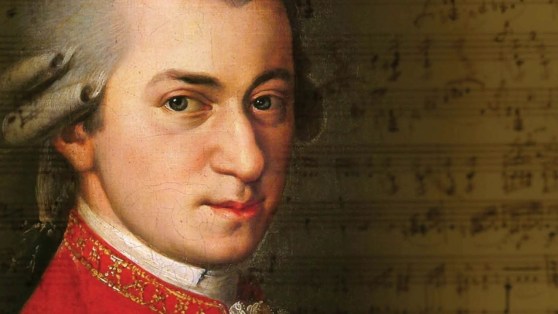
The Champion

2022.10.21.
classical music, Franz Liszt, Franz Liszt'a birthday

“Music laid dead on the battlefield and the bells of Strasbourg tolled at its funeral.”

He put down the newspaper and looked inside for a moment – he felt nothing. It is some thirty-five years since he left his own idol at the edge of the ditch and walked instead of traveling a gilded carriage. A hitherto non-existent road, of which critics, professionals and members of music commissions had been screaming in his ears for thirty-five years that it led nowhere. And about him – at first in whispers and winks, later more and more boldly, with the menacing tone of street thief gangs – it was spread with a barely concealed joy that he had gone mad, our of his mind, for he was the first among pianists and the last among composers.

There was no change in his face, perhaps his tired wrinkles became a shade greyer, and his back a bit more hunched, for every minute he carried the carcass of his dead children – the works he was born to create, which gave form to what he could no longer relate with his fingers, and which were lustfully murdered by well-chosen, poisonous words, and which were senselessly suffocated by the vacuum of neglect.

There was no change in his face: he remembered Richard’s mocking half-sentence about the oratorio, Cosima’s pitying, alien glance, and then Carolyne, who could not be completely his. He could not recall the beginning of this battle started in which he seemed destined to lose. . “I’ve still stood up so far,” he thought crookedly, and then, bending his stiff legs with difficulty, he knelt down by his worn kneele, so that the turmoil of his soul might be resolved into peace by the harmony of heaven, and so that he might find again the fire that would heat the furnace of the new piece of his.

Abbey Liszt bowed his head, and was not surprised to see a somber drop of blood on his large, clasped hands.

(Franz Liszt: 22 October 1811 – 31 July 1886)

______________

Author: Máté Hámori
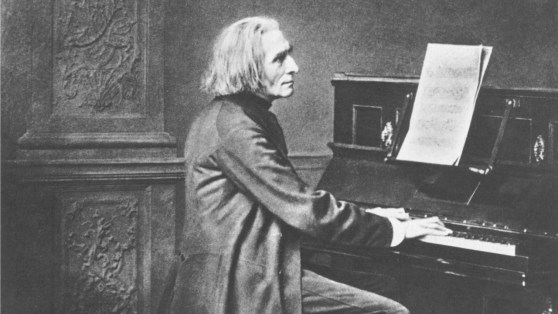
Preparing: the conductor! (Part 1)

2022.10.05.
Artúr Nikisch, classical music, conductor, Máté Hámori

I often – many times – get the question (of course following the most popular of the questions, which is this: actually, what is a conductor needed for at all? – but more on that later) how does a conductor prepare for a concert? So I tried to summon how this goes – in general.


A conductor on the Lenin path.

The only “wisdom” I can quote from the red-handed Vladimir Ilyich Lenin (only my first-grade certificate had a coat of arms with stalks, thank God) is also a conductor’s most important travel pack for a life: Learn, learn, learn.


Nikisch – the ancestor of the infallible tyrants

Of course I can’t write about how The Conductor learns, as this field includes countless cults too. I am not going to talk about the unrepentant geniuses who, thanks to their photographic memory or their infallible voice recorder brain, hardly ever learn. These included, for example, the legendary Arthur Nikisch, the great-grandfather of all modern ‘great conductors’, idol of the divine Furtwängler.

Nikisch is said to have had such a photographic memory that he often didn’t even open the score before rehearsal, and then played through the piece with the orchestra once, closed the score – and knew it. The whole piece by heart. Now, we can dismiss such people with a contemptuous wave of the hand, because they “don’t understand this anguish”, at least what the constant hunching over the score means. (It is of little consolation to modestly able geniuses that this Nikisch practice also has its downside. The story goes that Max Reger once teased the master, who was about to sight-read prima vista, that he wanted to hear the double fugue first from his new piece. He smiled for a few minutes at Nikisch’s frantic flipping back and forth, then resignedly noted that there was no double fugue at all in the piece.)

Beyond Nikisch and Kocsis, there lie thousands of conductors – including me – who learn either slowly or more quickly, doubtlessly in agony. As with so many things, everyone does it differently, so I’ll tell you how I get to know a piece.


With or without preview

When a new piece of music comes to the conductor’s attention, two cases are possible: either he already has aural experience of the piece, or he is about to conquer a completely virgin territory. . In a way, I prefer the latter, for I can’t rely on my past memories as a crutch, but the thrill of discovery is coupled with a completely fresh set of eyes and ears, which can be a very important aspect in the long run. As the first encounter is of utter importance. I am convinced that here, as in instrumental practice, a significant part of the learning/practicing process is nothing more than correcting mistakes / misreadings fixed during the first read-through / first playing. It is no coincidence that in a letter Mozart wrote that he considered a musician to be ready when he plays an unfamiliar piece of music put in front of him at first reading, in tempo, flawlessly and with a right taste (recently we would say LOL, or something rasher), because our brain is a formidable instrument: it records every detail perfectly in the deeper, not yet consciously recallable memory. Of course, I don’t know of any musician who could live up to Mozart’s expectations, so we mortals are left with hours and hours of study and practice. Bad luck.


Now there’s chemistry, now there isn’t.

For my part, I prefer to start getting to know a piece by playing it thgrough thoroughly on the piano. Of course, instead of Mozart’s manner of “in tempo, flawlessly and with a right taste”, I usually start the first round in a sloppy, repetitive, analytical way. And it is usually around the secondary theme that I find out whether the “chemistry” between the piece and me works or not, whether there is love at first hearing or whether we are in for a subtle, prolonged process of liking each other during the hours we spend together. When the torch of passion is lit, it means a great joy, because – as with real love – you can almost overlook the difficult, unwanted moments. Which is a bit different to works you “must love”.

One thing is for sure: one of a conductor’s main duties is to arrive at the first rehearsal with maximum preparedness, for on this rehearsal somewhere between 10:00 and 10:10 is where it turns out how the concert four days ahead will be. And there’s long and winding road to this preparedness…

(to be continued …)

______________

Author: Máté Hámori

Children we are

2022.09.14.
classical music, classical music for children, classical music for young people, youth concerts

Do we need this? All this seriousness, rigor, performance and success? Of course we need them. Unfortunately. Because we have grown up, and as the green sprouts harden as they grow, so have we grown pale and crusty. We have lost our flexibility and brag to ourselves being strong and invincible. But no: the windstorm that only bends a green sprout, would rattle the trunk of a tree crackling. We withered, we learned to “sleeping with indifference”.

“Every child is an artist. The problem is how to remain an artist once we grow up.” P. Picasso (Illustration by Dave Weiss)

But still there must be an inexpressible hope, an overwhelming expectation, an unquenchable excitement: here comes life, and what I will have is like nothing I have ever had before! This is how we wait for adulthood as children, and what we wait for will never really come. This wonderland can only exist in the mind of a child, in the depths of a dense forest of mysteries and secrets, a magnificent castle: the life to come.

We must never lose this castle, we must protect it and cherish it: just as a prisoner, in the depths of a prison trying to preserve his sanity, dreams of gardens, lakes, sunshine and love with his eyes closed, so we must descend, day after day, with force, into the depths of childhood, to wander through the forest of secrets and mysteries, to admire the palace of imagination, to believe in life hidden in the eternal tomorrow.

Well, I believe, this is exactly what art is for. To lead us back to the source, to turn the cold, woody bark into a green sprout again, to believe in fairy tales, in magic, in man, for several ninety minutes at least… so that the faded sparkle returns to our eyes.

Youth concerts by Máté Hámori and the Danubia Orchestra >>>

______________

Author: Máté Hámori
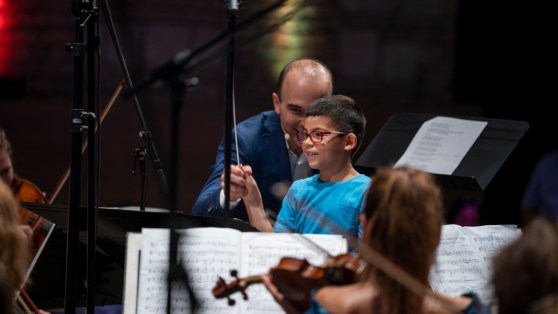
Reverence, September

2022.09.11.
Academy of Music, Beethoven, Britten, classical music, conductor, Máté Hámori, Respighi

It all started on the corner of the streets Munkácsy Mihály and Szondi. Not before I stepped on the crosswalk, but by the time I crossed Szondi Street towards the corner of Epreskert, it was already there. The chocolate was already dripping, the pistachio was still holding, no one on the streets, the sun was blazing like a torch – as my distant relative Dide would have written. And then time stood still, and in my hand with the melting ice cream I found the perfect moment, the unspoken bliss of existence.

There are some things one does not out of necessity, but in obedience to some hidden, inner impulse. Sitting in an empty cinema alone, popping down for an ice cream, getting off one stop earlier and walking, smiling at the old lady on the subway. And such thing is listening to music. It makes no sense, it makes no profit, it does not “move the world forward”. But it can preserve that moment, the one that crawled alongside me in the crosswalk and led me by the arm for a few more minutes. It’s a miracle like the one Louis Daguerre saw after long minutes of anxious waiting, when the exact image of a busy Paris street was outlined on the glass – and stayed there forever. Poetry, music: timeless photographs of moments we wait for all our lives, often in vain.

The ice cream is gone, leaves will fall, days are getting shorter, streets will get crowded. Yet, that moment will stay with me. Thanks to you, Johannes! Thanks to you, Dide!

My September stop on the path of musical beauty and reverence:

21-09-2022: Respighi / Britten / Beethoven – Academy of Music >>>

______________

Author: Máté Hámori

  • 1
  • 2
  • »

widget title – 13348442cc6a27032d2b4aa28b75a5d3

widget title – 1442ecba6ac5cec2f358204a6b00924a

Mozart and time management

Chekhov, rifle, muses

What is a rehearsal?

Let’s share!

2024 ® MATÉ HÁMORI
ALL RIGHTS RESERVED
We use cookies on our website in order to provide the most relevant site experience by remembering your preferences and visits. By clicking the "Accept All" button, you consent to the use of ALL cookies. However, you can visit the "Cookie Settings" menu item and give partial consent.
Cookie SettingsI accept all
Manage consent

Privacy Overview

This website uses cookies to improve your experience while you navigate through the website. Out of these, the cookies that are categorized as necessary are stored on your browser as they are essential for the working of basic functionalities of the website. We also use third-party cookies that help us analyze and understand how you use this website. These cookies will be stored in your browser only with your consent. You also have the option to opt-out of these cookies. But opting out of some of these cookies may affect your browsing experience.
SAVE & ACCEPT
  • Magyar (Hungarian)
  • English