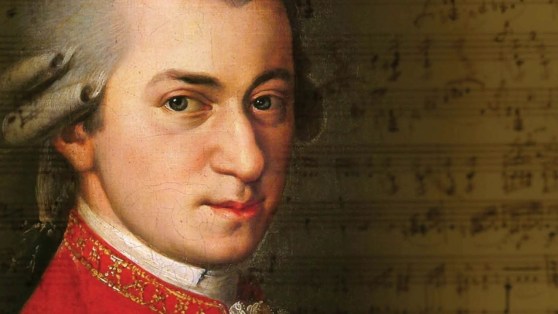
Mozart and time management
As if there is no tomorrow / as if there is always a tomorrow. Which one is how you live? The thinking of our ancestors was obviously determined by the practically constant compulsion to make the above paradigm choice, and this is the basis of the dynamic tension of mundane / otherworldly life, which is the main foundation of Christian culture. If you live like that today, there will be an eternal tomorrow, but if you live like that, don’t even consider buying preserved milk, , you won’t survive to consume it.
Christianity by the left (or rather by the right), so we are left with paradigm number two. We are comfortably surviving the day, waiting for something to happen, everything is pleasant, our only fear is that the comfort of our survival mode may be even slightly ruined by some unexpected unpleasant event (illness, war, the neighbor drilling the wall on the weekend).
We work (?) a lot (?), but we also live well (?), we don’t need anything else, though more money would be nice. And that’s it. The old-fashioned question of what the hell it’s all for is only asked by adolescents or frivolous, naive dreamers, but it is not at all the subject of so-called social debate or common thinking (because what is the subject?, let’s interpose that at once). I don’t think that in earlier, more beautiful times peasants were leaning on their hoes, stopping every now and then in small groups, scratching their heads over the possible meaning of life, but the fact is that the vast majority of resources invested in common (material) efforts – in church, art, even political thought and action (war) – were somehow related to the above question, unlike in our own bright age, when even the semblance of such a connection shall be avoided. In Michelangelo’s time, the oligarchs were no meeker, nor the money-changers any more groovy, but the common manifestations of society – and here I include Michelangelo, who was obviously not a personal product of Julius II, but a product of the social expectations of his time – did produce Sistine Chapels, Mona Lisas and Gesualdo motets, moreover, in large numbers. The hundred years starting from the end of the 18th century, the century of Mozart, Goethe, Petőfi and Turner, could have been such an era. I read Mozart’s letters from his last months, and I am gripped by a terrible, overwhelming shame, and I am reminded of another of my shameful relatives: “what were you seeking on this earth…” (Kosztolányi)
We cannot imagine, comprehend, understand the frequency with which a Mozart (or a Liszt, or a Petőfi, or even a Salieri) lived in that age of perpetual death (only two of Mozart’s six children reached adulthood), nor do we mean by the word “live” what they might have meant. The hero of our title woke up at 5am at the latest, visited his friends by turns, wrote the first letters of the day (followed perhaps by more in the afternoon), listened to freemasonic lectures and attended meetings, arranged a school for his son, went to the opera every night, drafting applications for a job, copying speeches, having coffee with Schikaneder, while playing billiards, dealing with financial affairs, surviving constant illness and physical sickness, inadequate heating, poor quality drinking-water, terrible and dangerous medicines. And he composed more than six hundred works, perfect ones almost without exception. All this in thirty-five years (sorry, only thirty, he couldn’t manage to do it in his first five.) With a Salieri, the difference will only appear in the quality of the works the rest is about the same.
It’s not just about diligence, it’s about the cause of diligence. The dilemma can be posed as Attila József put it: Why should I be honest? I’ll be laid out, anyhow! Why should I not be honest! I’ll be laid out, anyhow!
But this is our age already: here, being laid out won’t be followed by anything, the dilemma goes on till the heart sound stops. And perhaps this is the key point: Mozart was not a cynical, flamboyant genius of his time, who solved the tasks before him with the superficial religiosity of the conventions of his time, whose horizons would have been filled exclusively with eating-drinking-fucking-laughing.
That way this wouldn’t have been possible. The Magic Flute is not a silly fairy tale with freemasonic babbling and mystical blah-blah-blah, which today serious people (i.e. the miserable protozoan of an unenchanted world) cannot interpret without chuckling (Mozart was insulted to death by a contemporary audience member of his opera who rewarded his masterpiece with continuous, incomprehensible giggling). The Magic Flute is about life, about the flow of tribulations, the vale of tears, the hellish ordeal, the physical and spiritual suffering that leads to tomorrow, to salvation if you like. He does this with the love that is so essential to Mozart’s music, and with the understanding, the loving embrace of all humanity, a gesture we will hear again – much more desperately – in Beethoven’s Ode to Joy.
He is not an infantile, hedonistic, unconscious angel, who has been penned works of heights beyond his reach – as the unfortunate twentieth century has tried to explain it. Not Papageno, but a thirty-five-year-old Sarastro, with mature wisdom, acquired and suffered knowledge and wisdom (!), a real self-made man at an exceptionally high stage of personal development – that was Mozart, the way he seems to me. Figaro and the Jupiter Symphony were not dropped here by chance, but by a man like us, “close to our hearts”. Someone who knew what was in store for him, loved his partner with a true, deep love, did what he had to do as seriously as possible so there will be a tomorrow. This is also the “secret” of the Magic Flute: there is no instant tomorrow, life is a momentary transition, we are given only moments between waking up and finally passing out, and in those moments we must starve, listen, and pass through fire and water. Our footsteps can thus be guided by nothing other than a full and mature faith that leads us to the eternal tomorrow that will be born after the death of the calendar tomorrow, to union, to love, to the unknown realm beyond the world of night and day. That’s where Mozart was headed up to, and that’s how he became, that’s how he could only become Mozart and also a truly happy man.
Where are we headed up to? Lake Balaton? Wellness? Retirement? Will it be easier all at once? “This road leads toward the target” – but you will have to choose your target. And wisely.
______________
Author: Máté Hámori
Photo: Wikipedia